
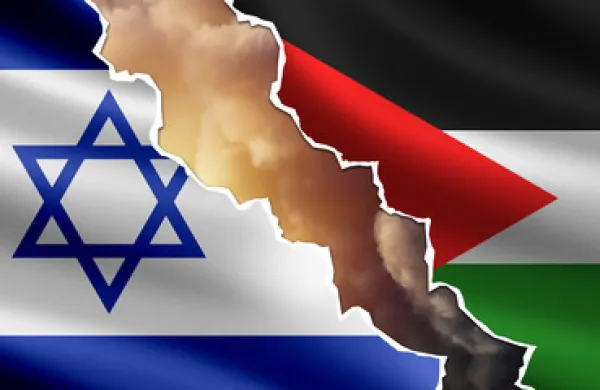
For more than four decades, the United States’ approach toward Iran was defined not by open warfare, but by sustained pressure. Crippling economic sanctions, covert sabotage, and targeted assassinations formed a long-running strategy designed to contain Iran’s nuclear ambitions without triggering full-scale conflict. This protracted shadow war—while aggressive, harmful to ordinary citizens, and often controversial—maintained a critical boundary: it stopped short of direct military confrontation.
In 2026, that boundary was decisively broken. Under the leadership of Donald Trump and Benjamin Netanyahu, the United States and Israel launched a large-scale military campaign against Iran, marking a historic escalation from covert pressure to open war. While both governments framed the operation as a necessary response to security threats, the alignment between Trump and Netanyahu was unusually close. Analysts and critics argue that Trump’s decision reflected a willingness to adopt Israel’s more expansive strategic objectives—particularly regarding confrontation with Iran—raising questions about whether the “America First” doctrine had, in practice, been subordinated to align with Israel’s agenda in the Middle East—what some critics have derisively called “Israel First.”
Trump initially justified the war as a matter of urgent necessity, promising it would be “quick and surgical.” The central claim was stark: Iran was on the verge of developing a nuclear weapon, posing an immediate and intolerable threat. If true, such a justification would place the war within a framework of preemptive self-defense. However, that rationale quickly began to unravel. Independent analyses raised serious doubts about both the immediacy and the accuracy of the nuclear threat as presented, calling into question the legitimacy of the war itself. If the threat was overstated, then the foundation of the conflict rests not on necessity, but on narrative.
Even more revealing is how rapidly the stated objectives shifted. What began as a mission to prevent nuclear proliferation soon evolved into something far more ambitious: regime change. Early in the conflict, both Trump and Netanyahu openly called on the Iranian people to overthrow their government. In a recent interview, Trump appeared to acknowledge that the United States had provided weapons to opposition groups during mass anti-government demonstrations in late 2025 and early 2026, in which thousands were reportedly killed during government crackdowns. This was not a subtle evolution—it was a clear declaration that the war aimed not only to neutralize a perceived threat, but to fundamentally reshape a sovereign nation’s political system.
Preventing nuclear proliferation—even if it were the genuine objective—and toppling a government are not interchangeable goals. One is defensive in principle; the other is deeply interventionist.
The conduct of the war reinforces this interpretation. Early strikes were not limited to nuclear facilities or military installations; they included “decapitation” attacks targeting senior Iranian leadership and eliminating key figures within the political and military hierarchy.
Yet the outcome did not align with the expectations of U.S. and Israeli planners. Despite the loss of senior leadership, the Iranian government remained intact and operational. It responded with large-scale retaliatory attacks, including missile and drone strikes against Israel and U.S. military assets across the Persian Gulf. Iranian forces effectively blocked the Strait of Hormuz, severely disrupting global energy supplies and major shipping routes. In turn, the price of oil, gas, and other commodities surged worldwide.
More than a month into the conflict, the regime demonstrated a level of resilience that appears to have been underestimated. Amid growing skepticism at home and abroad, soaring cost of war, global energy shortages, and economic instability among U.S. allies in the Persian Gulf, Trump has faced mounting pressure to contain the fallout. He issued multiple ultimatums to Iran seeking a negotiated settlement, all of which were rejected. In response, the campaign expanded to include critical infrastructure—bridges, energy systems, and industrial sites essential to civilian life. While such targets may carry strategic value, their destruction inevitably affects ordinary people, blurring the line between military necessity and collective punishment.
Perhaps most troubling is the rhetoric accompanying these actions. Trump publicly warned that “a whole civilization will die tonight” if Iran failed to meet his deadline, and suggested the United States could “blow up the entire country” by destroying key infrastructures. Such statements mark a dangerous escalation, amplifying fears of catastrophic civilian and global consequences.
This crosses from recklessness into something far more dangerous. When a leader speaks casually about entire civilizations perishing, it is not strength—it is a chilling indifference to human life. Threatening the destruction of millions—families, children, culture, and history—is not toughness or resolve. It is the language of annihilation, and it signals a profound collapse of moral restraint.
Rhetoric like this does more than shock—it conditions the public to accept the unthinkable. It recasts entire populations as expendable and turns human lives into bargaining chips in a geopolitical contest driven by ego and escalation. That is how catastrophes begin: not with a single act, but with words that make such acts seem permissible.
Leadership demands the opposite. It requires discipline, restraint, and a clear-eyed understanding of the irreversible cost of war. It requires drawing lines against escalation—not erasing them with apocalyptic threats.
This is not “America First.” It is a doctrine stripped of principle, where power is measured by the scale of destruction one is willing to threaten—and where, in the end, humanity itself is treated as expendable.